
Menopausal Problems
To explain menopausal problems in the simplest way possible: imagine your body has been running on a specific type of fuel (called Estrogen) since you were a teenager. This fuel controlled your periods, kept your bones strong, and kept your skin elastic.
When you hit menopause (usually between age 45 and 55), the “fuel tank” runs dry. The factory (your ovaries) shuts down. Because your body is so used to that fuel, it struggles to adjust to running without it.
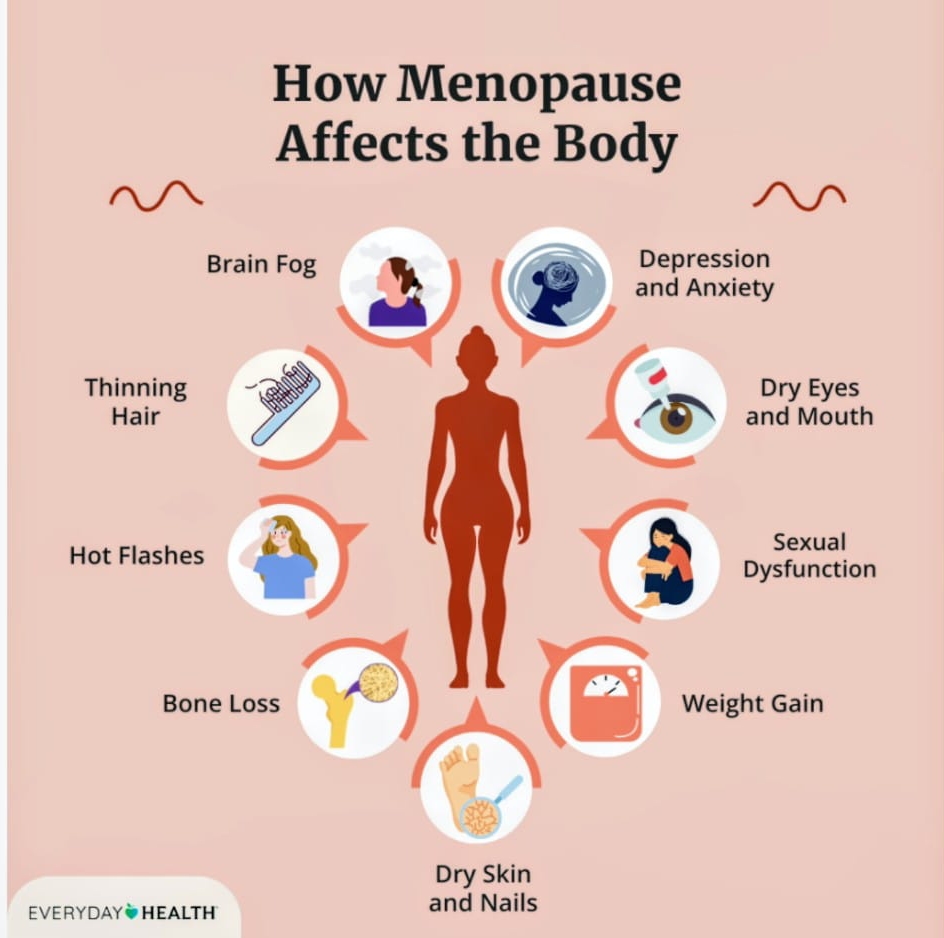
The "Thermostat" Problem (Hot Flashes)
1. What it feels like: You suddenly feel like you are standing inside an oven. Your face gets red, you sweat instantly, and your heart races. Then, just as fast, you might feel freezing cold.
2. Layman’s explanation: Without estrogen, the part of your brain that controls body temperature gets confused. It thinks you are overheating when you aren’t, so it tries to “cool you down” by making you sweat.
The "Private" Problem (Vaginal Dryness)
1. What it feels like: Itchiness, discomfort, or pain during sex.
2. Layman’s explanation: Estrogen acted like a natural moisturizer for your private parts. Without it, the tissues become thinner, drier, and less stretchy. This is very common but often embarrassing to talk about.
The "Mood & Mind" Problem
1. What it feels like: You might feel grumpy, anxious, or just want to cry over small things. You might also have “Brain Fog”—walking into a room and forgetting why you went there.
2. Layman’s explanation: Your hormones are fluctuating wildly (like a rollercoaster) before they settle down. This messes with the chemicals in your brain that control sleep and mood.
The "Silent" Problems (Long-term Health)
These are problems you don’t feel right away, but they are happening inside.
1. Weak Bones (Osteoporosis): That “fuel” (estrogen) was protecting your bones. Without it, your bones can become brittle and break easily from a simple fall.
2. Heart Risks: You lose the natural protection against heart disease, so your risk of heart attack increases to the same level as men’s.